The Major French Cycle Routes. Part 3

CRTNA
1 . The Flow Vélo: a smooth journey between Dordogne and the Atlantic
The Flow Vélo lives up particularly well to its name. This route was designed to offer a constant feeling of fluidity, a journey where you can cycle without constraints, simply letting the landscape guide the rhythm of the day. Connecting the Dordogne to the Atlantic Ocean, it largely follows the Charente Valley, the true guiding thread of the journey.
A gradual warm-up in the heart of the Périgord
The departure around Thiviers, in the Dordogne, immediately sets the tone of the journey. The first stages invite a progressive warm-up, with slightly rolling terrain.
The cyclist here crosses typical Périgord landscapes, between deep forests, small quiet roads, and character villages with golden stone. You pass through peaceful towns such as Saint-Jean-de-Côle, listed among the most beautiful villages in France, with its medieval bridge and castle, or Brantôme, often nicknamed the “Venice of Périgord,” with its troglodytic abbey and its river surrounding the historic center. It is an ideal introduction to get your bearings, adjust your bike, organize your panniers, and find your cruising rhythm. You learn to manage your effort, to adapt your gearing in small climbs, and to enjoy descents to release pressure.
The Charente Valley: an ideal terrain for cycling

CRTNA
From Angoulême onwards, the Flow Vélo becomes particularly pleasant to ride. Perched on its promontory, the city offers a beautiful break before descending back into the valley. Its historic center, ramparts, and Saint-Pierre Cathedral are well worth taking the time to stop the bike.
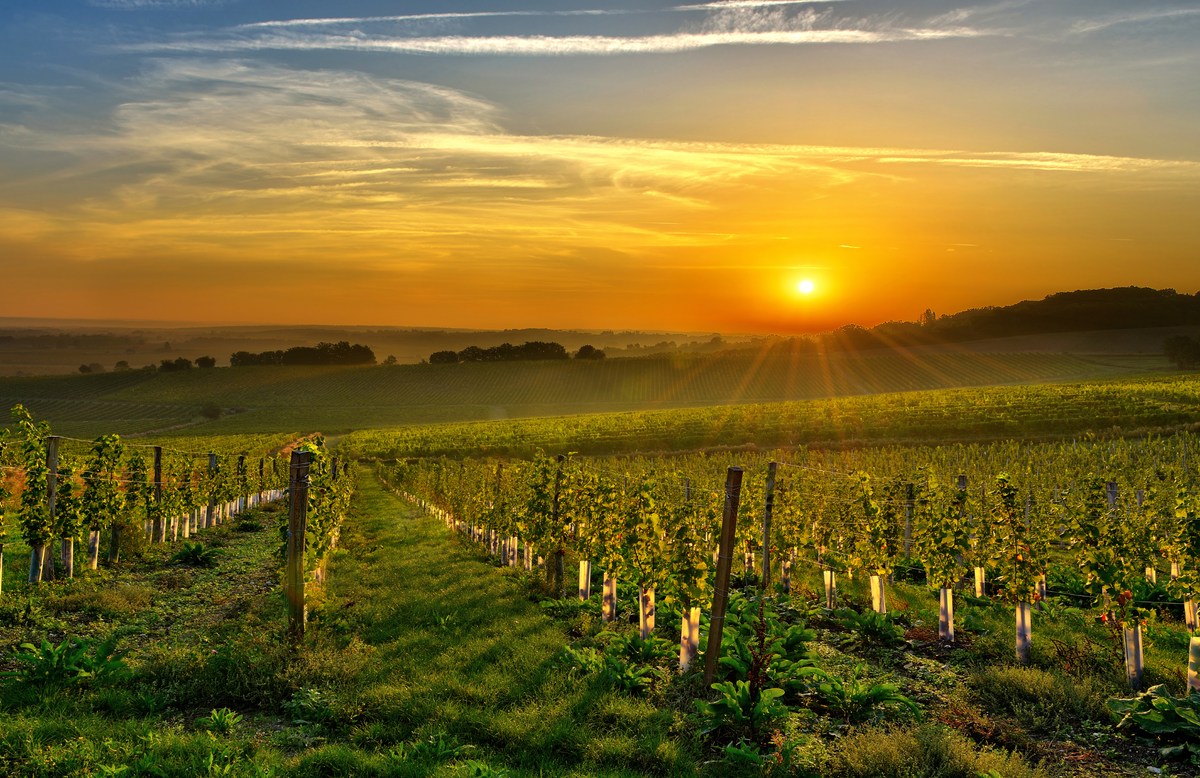
The route then closely follows the Charente, offering flatter sections, often on greenways or small low-traffic roads, ideal for cycling in complete serenity. Passing through Jarnac, birthplace of François Mitterrand, marks a first peaceful stop by the water, before arriving in Cognac, the true heart of the route. The city, elegant and turned toward the Charente, is world-famous for its trading houses such as Hennessy, Martell, or Rémy Martin. Here, vineyard landscapes stretch as far as the eye can see, dotted with cellars, estates, and small roads lined with vines. These stages are also an opportunity to slow down voluntarily, to get off the bike, visit a cognac house, or enjoy a tasting, in a spirit of cycle touring where effort and pleasure naturally complement each other.
The route continues toward Saintes, a city of art and history, where you can discover the Arch of Germanicus or the impressive Gallo-Roman amphitheater. It is an ideal stop to immerse yourself in local heritage.
A gentle arrival toward the ocean
Continuing toward Rochefort, an old royal city created under Louis XIV, the route gradually takes on a more maritime dimension. The famous Corderie Royale, nearly 400 meters long, bears witness to the city’s naval past and is a must-see visit. The final kilometers, often flat and very accessible, allow you to ease the effort accumulated over the days. Pedaling becomes smoother, almost automatic, carried by the desire to reach the ocean. The arrival in La Rochelle, with its old port, its medieval towers (the Saint-Nicolas tower, the Chain tower), and its lively atmosphere, offers a perfect conclusion to this journey. It is also possible to extend the experience to Île d’Aix, accessible after a short crossing, for an even more exotic finish.

Charlotte BARRIERE
The Flow Vélo is an ideal route for a first major cycling experience: accessible, well-equipped, and varied enough to maintain interest throughout the journey. It allows you to discover the simple pleasure of traveling by bike, in harmony with the landscapes and territories crossed.
2 . The Vélofrancette: a bucolic and progressive crossing
The Vélofrancette is one of those routes that people often discover without expecting much… and which end up leaving a lasting impression.
Connecting Ouistreham to La Rochelle, it crosses a rural, peaceful, deeply authentic France. It is a route where you take time to pedal, where you adjust your pace along the stages, and where each section of road brings an unexpected discovery.
A journey between rivers, villages, and heritage

French Wanderers
The departure from Ouistreham, facing the sea, allows you to begin the journey with a maritime, almost symbolic atmosphere, before gradually turning the wheels inland. The first kilometers are easy, perfect for a gentle warm-up along the Caen canal to the sea.
You quickly reach Caen, a striking first stop, where it is pleasant to put down the bike and discover the Château de Caen, one of the largest fortified complexes in Europe, as well as the Abbeys of Men and Women, founded by William the Conqueror. Very quickly, the route heads into inland Normandy following the Orne Valley. Greenways here allow you to cycle calmly, without traffic, with an immediate sense of freedom. The cyclist follows the river, crosses small villages, and enjoys a calm environment.
Suisse Normande: a more sporty and spectacular passage
Arriving in Suisse Normande, the terrain changes significantly. The roads become more hilly. But this section is also one of the most beautiful of the route. The landscapes become wilder, between cliffs, wooded hills, and meanders of the Orne. Villages such as Clécy or Pont-d’Ouilly offer perfect stops to recover and enjoy the view. Arrival in Domfront, perched on its rocky spur, marks a strong moment of the journey. This medieval town, with its cobbled streets and castle remains, fully rewards the effort required to reach it.
A journey that softens toward the south
Leaving Normandy to reach Mayenne, the route profile gradually changes. The terrain becomes gentler, greenways become more frequent, and cycling becomes smoother. Passing through Mayenne then Laval offers pleasant stages, punctuated by riverbanks and lively town centers. In Laval, its castle overlooks the Mayenne. Continuing toward Angers, the cyclist finds a more urban atmosphere, but still very bike-friendly. The city, crossed by the Maine River, charms with its historic center and its impressive medieval castle, which houses the famous Apocalypse tapestry.
From there, the long flat sections allow you to cover kilometers without difficulty, adopting a steady and comfortable rhythm.
The Marais Poitevin: a timeless interlude
One of the most beautiful surprises of the Vélofrancette is undoubtedly the passage through the Marais Poitevin, a true natural gem.
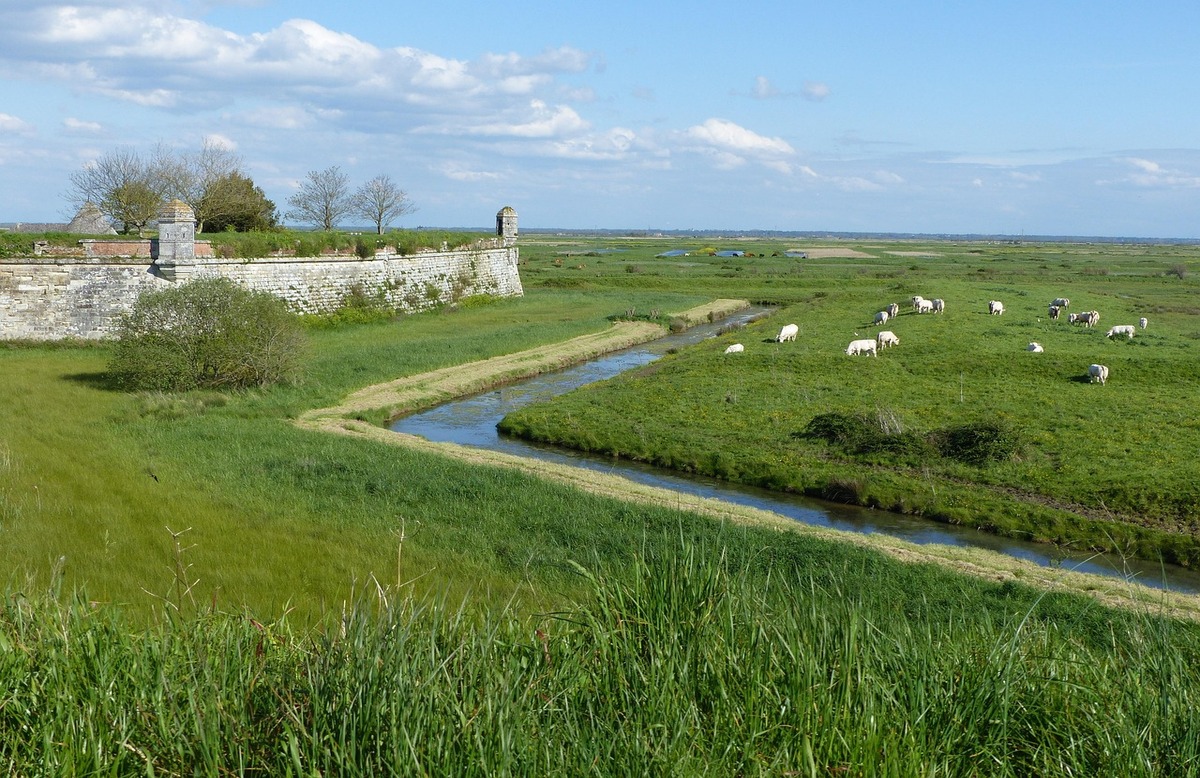
In this unique area, nicknamed the “Green Venice,” the cyclist moves along flat and shaded roads, perfectly suited to gentle progression. The canals, meadows, and trees create a peaceful, almost silent atmosphere, where you pedal without constraint. Villages such as Coulon, the tourist heart of the marsh, offer ideal stops for a boat ride. Here, the pace naturally slows down.

Alison BOISSARD CMT
A gradual arrival toward the Atlantic

Stephanie NADOUCE
Leaving the marsh, the route gently heads toward the ocean. The final kilometers to La Rochelle are particularly pleasant, on flat and well-maintained sections. Arrival in the city marks the end of the journey, with its iconic old port, medieval towers, and lively atmosphere. It is a perfect conclusion, between land and sea, after several days spent cycling through a more hidden France.
The Vélofrancette is an ideal route for those seeking a progressive, balanced, and accessible cycling experience. It allows you to vary pleasures between more sporty sections and rolling stretches, while discovering authentic territories. It is a cycle route where you learn to travel differently by bike: by taking your time and simply letting the rhythm of pedaling guide the journey.
3 . The Via Romea Francigena (Alsace): cycling along a historic route
The Via Romea Francigena, now known as EuroVelo 5, is a unique route in the European cycling landscape. Historically used by pilgrims traveling from Canterbury to Rome, it crosses France from northeast to south along a historically rich axis. Its Alsatian section, more discreet, offers a particularly rich experience for cyclists seeking an intimate journey blending heritage, culture, and the pleasure of cycling through varied landscapes.
A gentle entry along the canals

Fabien Voileau ADT
Entering France near Sarreguemines, the cyclist begins the journey on particularly favorable terrain. The first kilometers follow the Saar Canal and then the Marne-Rhine Canal, offering flat and regular towpaths. The rolling terrain allows easy progression while enjoying a calm environment punctuated by locks, barges, and small lock-keeper houses. Passing through Saverne is a first highlight. The town, nestled at the foot of the Vosges, charms with its marina and especially the Château des Rohan, an imposing building that reflects the region’s rich past.
Strasbourg: an essential stop for cyclists
Arrival in Strasbourg marks a key moment of the route. A European capital and true reference in soft mobility, the city offers ideal conditions for cyclists, with a dense network of bike lanes.
It is an opportunity to put down the bike and discover Notre-Dame Cathedral, a masterpiece of Gothic architecture, as well as the Petite France district, with its half-timbered houses and canals. After this more urban stage, the cyclist quickly returns to calm by following the Ill River, on perfectly designed bike paths, allowing a gentle exit from the city and a return to a more natural rhythm.

B.Salmanski ADT ARTGE
The Alsace Wine Route: between vineyards and character villages

Fabien Voileau ADT
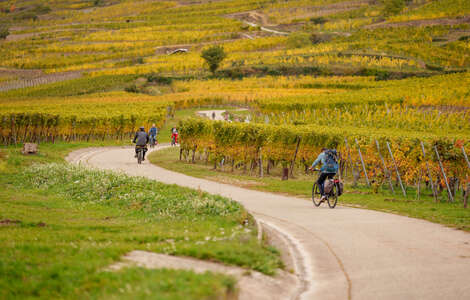
Leaving Strasbourg, the scenery gradually changes. The route approaches the foothills of the Vosges and joins the famous Alsace Wine Route. Villages follow one another, each with its identity: Obernai, with its ramparts and colorful houses, Ribeauvillé, surrounded by vineyards and dominated by castle ruins, Riquewihr, perfectly preserved, or Eguisheim, with its typical concentric streets. The terrain becomes slightly more demanding, sometimes requiring effort on short climbs. But these sections remain accessible and offer superb views over the vineyards and the Alsace plain.
A final journey between heritage and gentle living
Passing through Colmar is one of the most emblematic stages of the route. With its canals, half-timbered houses, and its Petite Venise district, the city offers a unique atmosphere, ideal for a longer stop. Continuing toward Mulhouse, the landscape becomes more open. This section allows you to ease the effort and finish the journey at a more relaxed pace. Arrival near Basel, on the Swiss border, marks the end of this Alsatian crossing. After several days in the saddle, the cyclist leaves France with the feeling of having traveled a rich, varied route deeply rooted in European history.
The Via Romea Francigena in Alsace is not a spectacular cycle route in the classic sense. It does not seek performance or vast open landscapes. It offers something else: a more intimate, more cultural experience, where each stage tells a story. Cycling this route means following in the footsteps of ancient travelers while enjoying the modern comfort of cycling infrastructure.
Three routes, another vision of cycle touring
These three cycle routes illustrate another facet of cycling travel in France
- The Flow Vélo for a smooth and accessible journey
- The Vélofrancette for a progressive and bucolic crossing through territories
- The Via Romea Francigena for a cultural and immersive experience, between history and vineyards
Less frequented and more intimate, these routes offer a different kind of richness: that of slowing down, cycling differently, and fully experiencing each stage. Because, at the end of the day, the true luxury of a cycling journey does not lie only in the distance covered, but in the way one rides, observes, and allows oneself to be carried along by the road.