Must See Aquitaine: Between ocean and nature
Stéphane Chadourne
Aquitaine is a region that never allows itself to be grasped in a single glance. It is discovered in successive stages, like a series of cycling routes where each section of road reveals a different landscape. Here, the Atlantic Ocean imposes its immensity and raw energy, the pine forests create silent and almost infinite horizons that one crosses to the rhythm of the pedals, and the Bordeaux vineyards draw landscapes shaped by centuries of human expertise. Traveling in Aquitaine, especially by bike, means accepting to constantly change worlds without ever leaving the same regional identity.
Bordeaux, timeless elegance between heritage and modernity
A UNESCO-listed city with unique architectural refinement

Sophie-Duboscq
Bordeaux appears as an obvious choice as soon as Aquitaine is mentioned. The city, listed as a UNESCO World Heritage Site, offers a rare architectural harmony in Europe. Its historic center is one of the largest and best-preserved classical urban ensembles on the continent, and this unity immediately gives an impression of balance and softness, even for a cyclist arriving after several kilometers of travel. Upon entering Bordeaux, what strikes you first is the light. The blonde stone façades seem to capture the sun and reflect it with subtle warmth, giving the city an almost cinematic atmosphere. The streets stretch out elegantly, ideal for cycling, the perspectives are carefully designed, and the quays of the Garonne offer an open space where the city breathes and where cyclists find a pleasant and fluid route.
The contrast between historic buildings and modern developments is particularly successful. Bordeaux is not a city frozen in the past, but a city that has managed to evolve without denying its identity, while integrating cycling infrastructure that facilitates exploration on two wheels. The water mirror, facing the Place de la Bourse, is one of its most iconic symbols, playing with reflections of the sky and architecture in an almost poetic staging.
A world capital of wine deeply rooted in its terroir
But Bordeaux is also inseparable from wine. Here, wine is not just an economic or tourist product, but a founding element of local identity. It structures landscapes, exchanges, traditions, and even the cycling routes taken by travelers between the city and the vineyards. The city is surrounded by some of the most prestigious vineyards in the world, accessible in just a few pedal strokes for the most curious cyclists. This proximity is felt at every moment. Wine cellars, wine bars, specialized schools, and oenology events reflect a living and constantly evolving heritage. The Cité du Vin, with its bold contemporary architecture, perfectly embodies this desire to connect heritage and innovation. Bordeaux is therefore much more than a stop on a cycling itinerary. It is a gateway to a world where each bottle tells the story of a territory that can sometimes be crossed slowly, guided by the rhythm of the bicycle.

Teddy-Verneuil-lezbroz
Saint-Émilion, a medieval village suspended above the vineyards
A UNESCO site with timeless charm

About forty kilometers from Bordeaux, the cycling route changes dramatically. Urban streets give way to quieter roads lined with agricultural landscapes, where the cyclist moves between hills and vineyards. At the top of one of them appears Saint-Émilion, a medieval village listed as a UNESCO World Heritage Site, whose silhouette seems frozen in time. Saint-Émilion has a unique, almost unreal atmosphere. The narrow, winding cobbled streets rise and fall between blonde stone houses that have stood for centuries. Walking through its streets, one feels a rare historical continuity. Medieval architecture coexists with more recent elements, but always integrated with subtlety. Views over the village rooftops and surrounding hills offer travelers, whether cyclists or walkers, exceptional panoramas of the vineyards.
A territory entirely shaped by vineyards
What deeply defines Saint-Émilion is its inseparable link with viticulture. The village is literally surrounded by a sea of vineyards that can be discovered by cycling along the roads, forming a structured and changing vegetal ocean depending on the seasons. The wine estates surrounding Saint-Émilion are among the most prestigious in the world. Each château, each plot, each row of vines bears witness to meticulous work. Cycling routes allow close access to these landscapes, fully experiencing the relief and variations of the terrain. Beneath the surface, another world exists, with troglodyte cellars and underground galleries carved into limestone rock.

Vincent-Bengold
The Vélodyssée, a slow immersion between ocean and Atlantic forests
A major cycling route along the Atlantic coast
Aquitaine is also discovered in its most obvious natural element for cycling enthusiasts: the Vélodyssée. This cycling route runs along the Atlantic Ocean for hundreds of kilometers and offers total immersion in coastal and forest landscapes. Traveling by bike completely transforms the perception of the territory. Distances become stages, landscapes follow the rhythm of the pedals, and each section of the route invites you to slow down.
A gradual transition from Île de Ré to Bordeaux

Guy_RASKIN
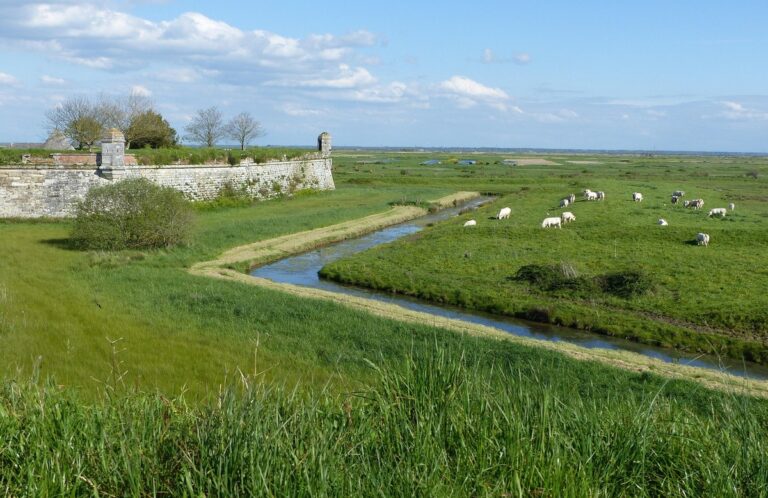
The route connecting Île de Ré to Bordeaux is particularly revealing of this landscape richness. It begins in a bright island environment, among salt marshes, white villages, and pure ocean light. Then the landscape opens onto long wild beaches where the Atlantic imposes its constant presence. Further on, dunes and pine trees mark the entrance to the Landes. The forests become dense, almost silent, creating a completely different atmosphere, more inward, almost meditative.
An exceptional and almost unique diversity of landscapes in Europe
What makes Aquitaine so unique is its ability to bring together very different natural worlds along routes that can be cycled. The Atlantic Ocean imposes its raw power and open horizons, offering spectacular road sections. The Landes forests then provide a striking contrast. They are ideal spaces for cyclists seeking calm, with long, straight, immersive paths. Finally, the vineyards bring a completely different dimension, more rhythmic and structured, where the landscape seems to naturally accompany the progression of the journey.
A land of gastronomy and exceptional wines
Aquitaine is also a major gastronomic destination. Its cuisine is deeply connected to local products, whether they come from the sea, farmland, or livestock farming. This diversity is reflected in dishes where the simplicity of recipes highlights the quality of ingredients. The region’s emblematic products reflect this richness: Atlantic fish, Arcachon Bay oysters, Landes poultry, and duck-based specialties. Aquitaine cuisine is generous, authentic, and deeply tied to its territory. Sweet treats, such as Bordeaux cannelés, complete this culinary universe with a strong and recognizable identity.

Peignée Verticale Auvergne-Rhône-Alpes
Wine, a cultural and identity thread

jackmac34
Wine remains the central element of this gastronomic identity. Bordeaux vineyards are among the most famous in the world, and their diversity allows for a wide range of styles and appellations. Saint-Émilion, Médoc, Pomerol, Graves, and Sauternes are not just names on a label, but entire territories with their soils, climates, and histories. Each wine is therefore a direct expression of the landscape from which it comes.
Tasting wine in Aquitaine is thus like reading a territory, understanding its nuances, and perceiving the subtle balance between nature and human work.
A region with multiple complementary identities
Aquitaine cannot be summarized by a single image. It is a succession of contrasts and complementarities. Bordeaux embodies urban elegance and cultural influence, Saint-Émilion represents medieval memory and winemaking tradition, the Atlantic coast expresses the power of nature, and the vineyards reflect patience and human excellence.
It is this diversity that makes the region so strong. Every trip to Aquitaine becomes a different experience, but always marked by the same sensation: that of a deeply alive territory, where each landscape tells a story and where each stage leaves a lasting impression.