Exploring the Loire Valley by Bike: The Most Beautiful Castles to Visit
LagrangeHervé
At the turn of the 16th century, the Loire River underwent a transformation. Fortified castles gave way to estates open to the landscape—places no longer meant for defense but for entertaining, for love, and for plotting. Kings and their mistresses came and went, each leaving their mark. By bike, on the paths connecting these estates, this history becomes palpable once again—in the stone, in the gardens, in the silence of the tree-lined avenues.
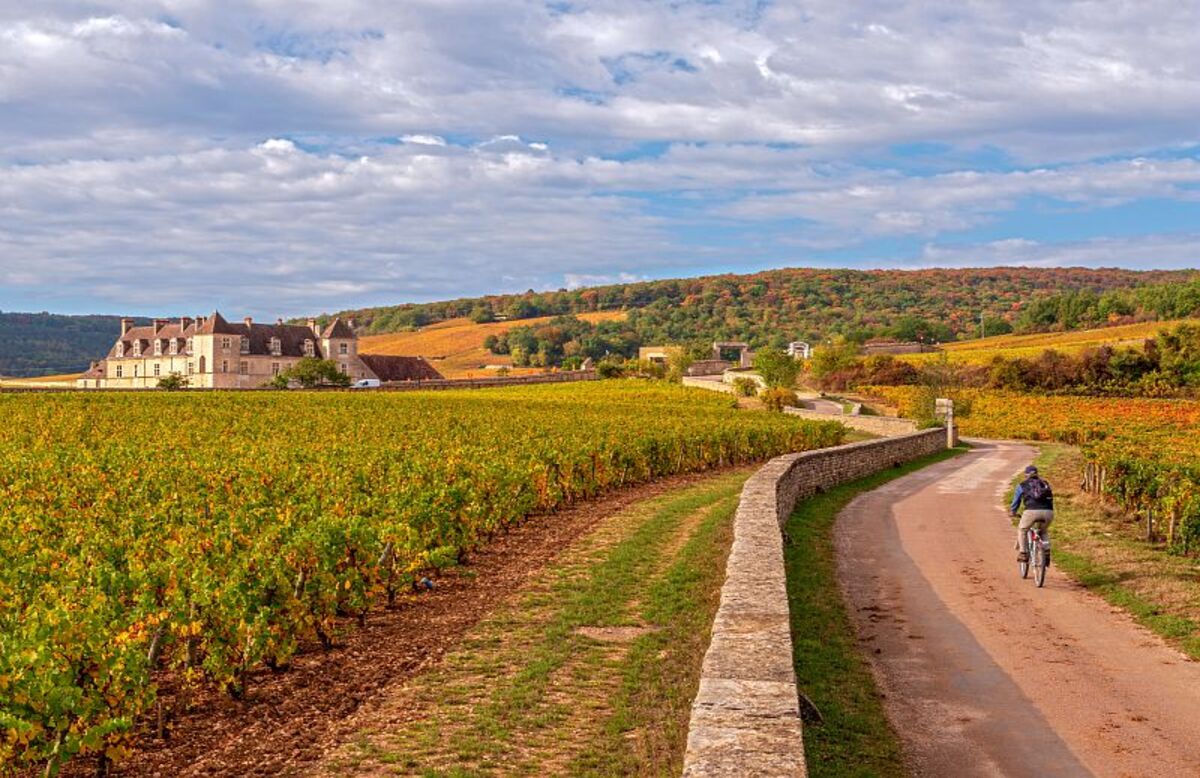
There’s a way to explore the Loire Valley that has nothing to do with tour buses and crowded parking lots. It’s by bike, riding alongside vineyards and the river, where each château first appears as a silhouette at the end of a plane-tree-lined avenue before revealing its white stone. Cycling from one estate to another means rediscovering the rhythm of kings: that of the courtiers who traveled between Amboise and Chenonceau, or the hunts that led from Chambord to Cheverny, and the romances and intrigues that shaped this valley, a UNESCO World Heritage Site.
1. Chambord: The Extravagance of Francis I
A stone monument at the heart of an estate as large as Paris
You can never be fully prepared when you arrive at Chambord. Even after seeing a thousand photos, the first glimpse from the road that runs through the park—5,440 hectares enclosed by walls, as vast as inner Paris—remains breathtaking. François I intended this to be a statement: 426 rooms, 282 fireplaces, 77 staircases, and that famous double-helix staircase, which legend attributes to Leonardo da Vinci, who died a few months before construction began in 1519.
What strikes you when cycling is the context the road lends to the monument. Chambord was not designed as a permanent residence but as a grand hunting lodge—a display of power in a game-rich region where the court would stay for a few weeks each year.
As you drive along the Cosson, the small river that borders the estate, it becomes clear why this marshy site was chosen: less for its comfort than for its game-rich forests and its proximity to the royal family’s lands.
By bike: the estate lends itself particularly well to a leisurely exploration. Bike paths wind through the forest park, far from the crowds of motorized visitors, with spots to observe wildlife (deer, wild boars) in the early morning.
1. Chenonceau, the Castle of Women
From Diane de Poitiers to Catherine de’ Medici: a gallery overlooking the Cher River
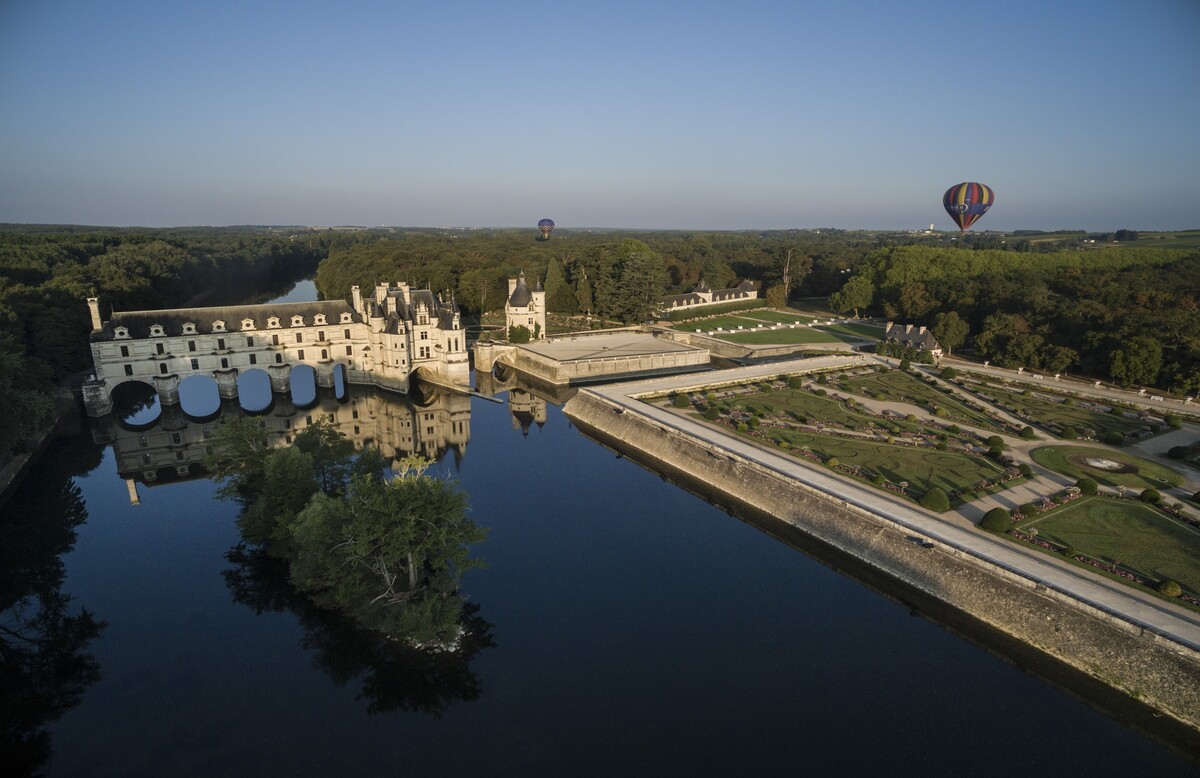
Diane de Poitiers, Henri II’s favorite, had the bridge over the Cher River built and the first gardens laid out. Then, upon the king’s death, Catherine de’ Medici took the château back from her rival, had the two-story gallery built on the bridge, and hosted the most lavish parties of the French Renaissance there.
This 60-meter-long gallery, built directly over the river, has become the most recognizable landmark on the Loire. It also served as a military hospital during World War I and as a de facto demarcation line between the occupied and free zones in 1940—with the Cher River marking the border and the castle’s southern exit allowing some people to secretly cross the line.

marc jauneaud
3. Amboise: Between Royalty and the Italian Renaissance
In the Footsteps of Leonardo da Vinci and Francis I

franceintense
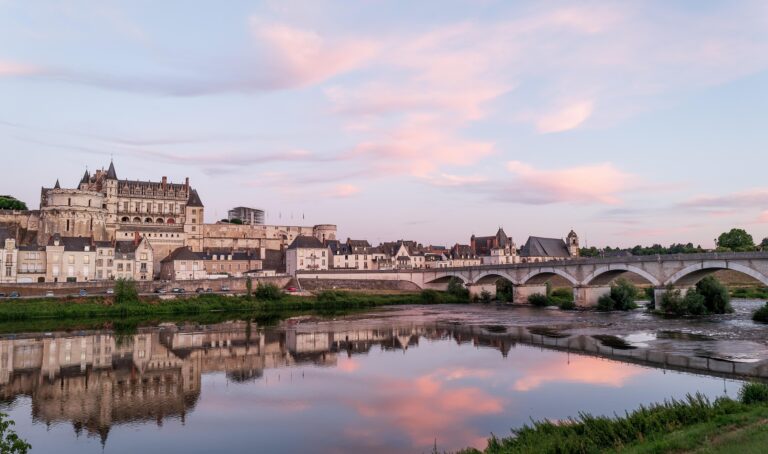
Amboise holds a special place in history: it was here that Charles VIII, upon returning from his military campaigns in Italy, brought back with him an enthusiasm for Italian art and architecture that would inspire the entire French Renaissance. The castle overlooks the town and the Loire River from a rocky outcrop, and its Saint-Hubert Chapel is said to house the remains of Leonardo da Vinci himself.
For it was indeed in Amboise that the Florentine master spent his last three years, invited by Francis I to the Clos Lucé, a few hundred meters from the château and connected to it by an underground passage. The two men, it is said, would meet there for long conversations. The Clos Lucé, now a museum, features Leonardo’s machines reconstructed from his notebooks—a helicopter, a tank, and a movable bridge—and a park where they are displayed in full scale.
As you head south, the landscapes become wilder, with the Monts d’Arrée and their rugged moors. A stop at Lake Guerlédan, Brittany’s largest man-made lake, offers the chance to go for a swim or enjoy a picnic by the water, while the bike paths along the Nantes–Brest Canal provide a flat, safe route to continue the journey. Lined with forests and meadows, the peaceful pace allows you to stop and visit historic sites.
Surrounded by forests and meadows, the peaceful pace of life allows you to stop and visit historic sites, such as Josselin, with its Gothic castle and half-timbered houses, or the historic heart of the Pays de Rohan.
4. The castles that line the route
Four Different Faces of the Loire
In addition to these three must-see destinations, there are several other areas worth including in an itinerary, each for a different reason.

raymondpoon
Chaumont-sur-Loire is well worth a visit for its International Garden Festival, which each year reimagines its garden plots around a different theme; the château itself has had an eventful history, as Catherine de’ Medici forced Diane de Poitiers to exchange it for Chenonceau after the death of Henry II.
Cheverny, which has remained in the same family since its construction in the 17th century, offers a welcome architectural contrast with its pure classicism, perfect symmetry, and remarkably well-preserved original furnishings—comic book fans will recognize it as the inspiration for Moulinsart Castle in ‘TinTin’.
A little further on, Villandry is not so much a castle as a garden: its Renaissance checkerboard-patterned vegetable gardens, redesigned in the early 20th century based on old engravings, are one of the finest examples of a French formal garden still preserved in France.
Finally, Azay-le-Rideau, situated on an island in the middle of the Indre River, embodies the understated elegance of the early French Renaissance, predating the grand displays of Chambord.
5. Gardens, Villages, and Architecture: What Cycling Reveals
Tuffeau stone, French gardens, and the art of taking one's time
What the car takes away, the bike makes up for. The white tuffeau villages nestled among the castles—Montrésor, Lavardin, Candes-Saint-Martin—are not merely logistical stops along the way: they are the ones that tell the story of daily life in a region shaped by the local limestone, quarried from caves that have been transformed into troglodytic cellars where mushrooms and sparkling wines are now cultivated.

The architecture of the Loire Valley itself tells a story of transition: from medieval fortified castles (Langeais, Loches) to Renaissance palaces opening onto the landscape, one can literally read in the stone the shift from a France at war to a France of the court, where buildings were no longer constructed for defense but to impress. Slate roofs, carved dormer windows, ornate chimneys: every detail is as much a social statement as it is an aesthetic one.
As for the gardens, they deserve just as much attention as the castles. Far from being mere backdrops, they were designed as extensions of their patrons’ power and taste—strict French geometry under Le Nôtre and his successors, followed by a return to nature with the rise of the English-style garden in the 18th century. Exploring them by bike, stopping whenever you please without the constraints of a schedule, allows you to understand this evolution in the perception of nature far better than a timed tour.
6. An itinerary that adapts to your pace, not the other way around
Every château in the Loire Valley has its own unique story, and every cyclist rides at a different pace. That’s why our cycling itineraries in the Loire Valley are never set in stone: they adapt to each person’s skill level, the number of châteaux you’d like to visit each day, and the time you want to spend exploring the gardens, tasting Touraine wines, or simply strolling through a troglodyte village.
Tous les châteaux évoqués dans cet article – Chambord, Chenonceau, Amboise, mais aussi Cheverny et Chaumont-sur-Loire – sont réunis dans notre circuit La Vallée de la Loire à vélo, de Blois à Tours.