Discover history the biking way

dorinefrequin
Traveling across France is much more than crossing regions: it is opening a living book whose every page unfolds before our eyes. In this country, history is never far away; it clings to the stones of castles, reflects in the waters of rivers, is carved into the rock of caves, and whispers through the countryside landscapes. Touring these places by bicycle transforms this reading into a sensory and intimate experience. The slow rhythm of pedaling allows time to admire the details, smell the scents of French gardens, linger over a medieval fresco or the polychrome walls of a prehistoric cave.
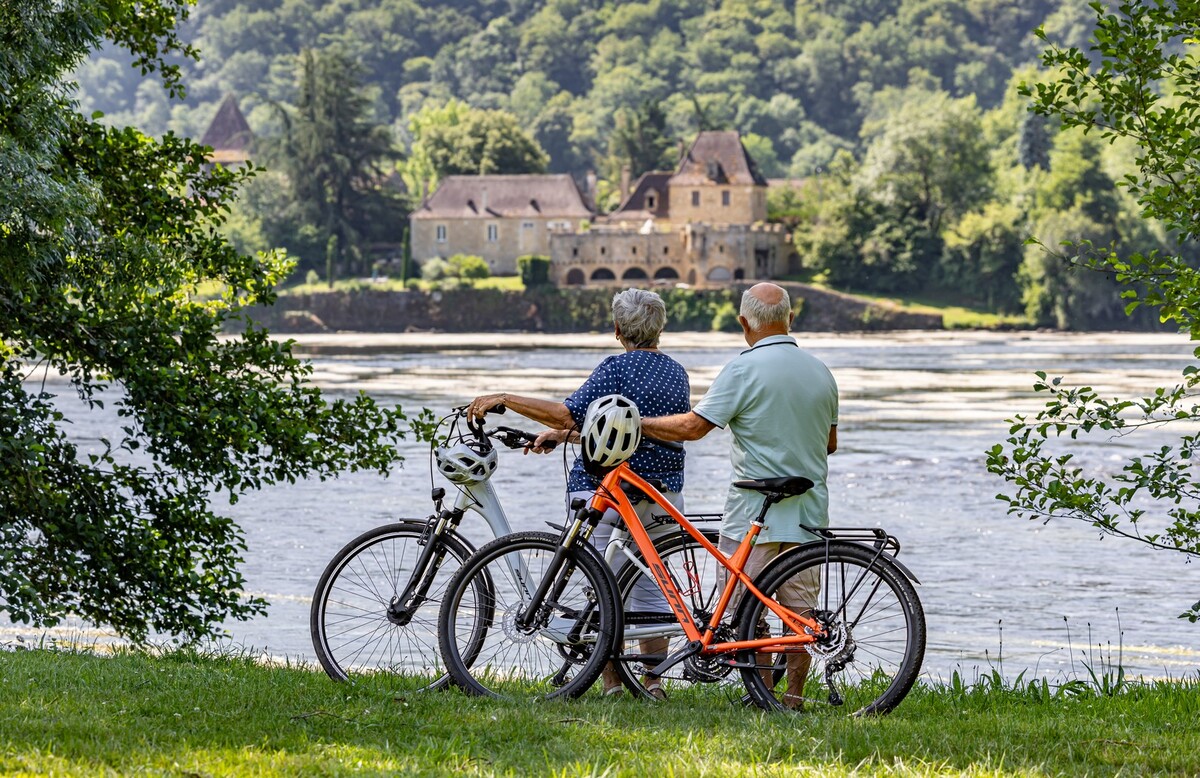
By bike, distances fade and the pace imposes a special communion with the territory. Roads lined with vines, towpaths along the Loire, forest trails of Rambouillet, or the valleys of the Dordogne become invitations to discovery, where each pedal stroke brings you closer to both the past and the landscape.
A journey where one does not merely see France, but truly lives it, in harmony with the traces left by those who shaped it.
The Loire and Its Castles: The Renaissance Along the Water
The Loire Valley, nicknamed for centuries “the Garden of France,” is one of the grandest theaters of French history. Here, the river winds between forests, villages, and vineyards. Between the 15th and 16th centuries, the region became the favored residence of the kings of France. The banks of the Loire and its tributaries were then covered with sumptuous homes, which were not merely residences but genuine declarations of power.
Most of these castles, however, have roots in the Middle Ages. Originally, they were massive fortresses: thick walls, defensive towers, drawbridges, and arrow slits. Their primary function was not to amaze but to protect. Then came the Renaissance. With it blew a new wind from Italy, brought in the baggage of sovereigns and artists. François I, an emblematic figure of this transformation, invited brilliant minds such as Leonardo da Vinci to his court. Art, architecture, music, and painting were transformed. Castles were no longer solely military strongholds; they became places of life, celebration, and display.
Touring the region by bike, one can almost feel this transition between two worlds: the austere stone of the Middle Ages gives way to sculpted facades, large windows that let in light, and monumental staircases designed as works of art. The castles seem to converse with nature, integrating into the landscape rather than dominating it. This harmony largely explains why the Loire Valley is a UNESCO World Heritage site.
The Loire Valley: A Royal Garden

The kings’ choice of this region was no accident. The climate is mild, the soil fertile, and the river a true commercial artery. The gardens surrounding the castles became artistic extensions of the residences. Symmetrical flower beds, perfectly traced avenues, ponds, and fountains were designed. These French gardens embody a philosophy: nature is not left free; it is planned, organized, and sublimated.
By bike, riding along the Loire feels like traveling through an open-air gallery. Each turn reveals a stone silhouette, a bell tower, or a flowered terrace. The castles are never isolated; they seem always to have belonged to the scenery. The river, once a transport route for goods and a symbol of prosperity, remains today a thread connecting history and landscape.
Chenonceau: The Castle of the Ladies
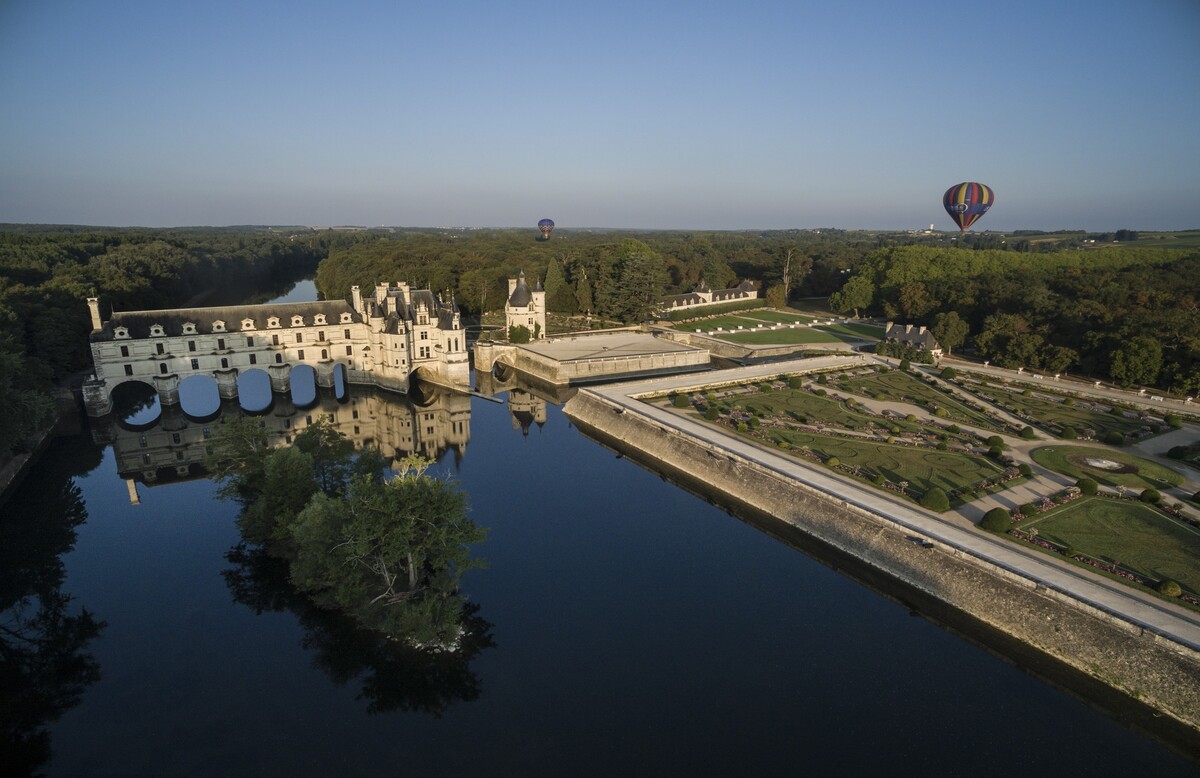
If there is a castle that seems to float between sky and water, it is Chenonceau. Built on the Cher River, it is nicknamed the Castle of the Ladies due to the women who marked its destiny. Catherine Briçonnet oversaw its construction, Diane de Poitiers embellished it, Catherine de Medici had the famous gallery that spans the river erected. Later, Louise of Lorraine and Madame Dupin protected it during troubled times.
Its bold architecture, gardens designed by female hands, and interiors adorned with tapestries and sculpted fireplaces make it a masterpiece of balance and delicacy. By bike, arriving at Chenonceau often offers one of the most poetic moments of a journey: the reflection of the castle on the water gives the impression of a painting in motion.
Villandry: When Nature Becomes Art
The Château de Villandry is famous for its gardens, true living paintings. Here, the Renaissance literally blooms. Geometric flower beds, a boxwood labyrinth, decorative vegetable gardens, and a rose garden compose a symphony of colors and scents. Each space has a meaning: Ornamental Garden, Water Garden, Herb Garden… Nothing is left to chance.
Yet Villandry could have faded into oblivion. After the French Revolution, its gardens were transformed into an English-style park, losing their identity. In 1906, a passionate couple, Joachim Carvallo and Ann Coleman, undertook to restore its original splendor. Using old plans and period documents, they recreated the Renaissance gardens with remarkable precision. Today, their descendants continue this mission. Villandry has thus become a symbol of heritage transmission and resilience.
Chambord: Royal Excess

hongbin
In the heart of the Sologne lands rises Chambord, a monumental palace commissioned by François I. More than a residence, it is a political manifesto engraved in stone. Its double-helix staircase, inspired by Leonardo da Vinci, symbolizes the intellectual audacity of the Renaissance. Terraces bristling with chimneys and sculptures give the ensemble an almost fantastical silhouette.
Chambord has traversed the centuries through splendor, abandonment, and restoration. Louis XIV held feasts and hunts here, Molière staged Le Bourgeois gentilhomme, then the Revolution looted it without destroying it. Becoming state property in the 20th century, it is now a historical monument and UNESCO World Heritage site. Touring its park by bike measures the scale of royal ambition: the estate seems infinite.
Paris and Île-de-France: Residences of Power and Inspiration
Just a few kilometers from Paris, the castles of Île-de-France offer a fascinating dive into French history, where political power, personal rivalries, and artistic creativity combine to shape exceptional sites. Each monument tells a unique story, reflecting the ambitions of its owners and the cultural evolutions of their era. Traveling from one estate to another by bike transforms the stay into a cultural experience: the landscape becomes a connecting thread between past and present, forests and gardens linking palaces and reception halls.
Versailles: The Absolute Theater of Power
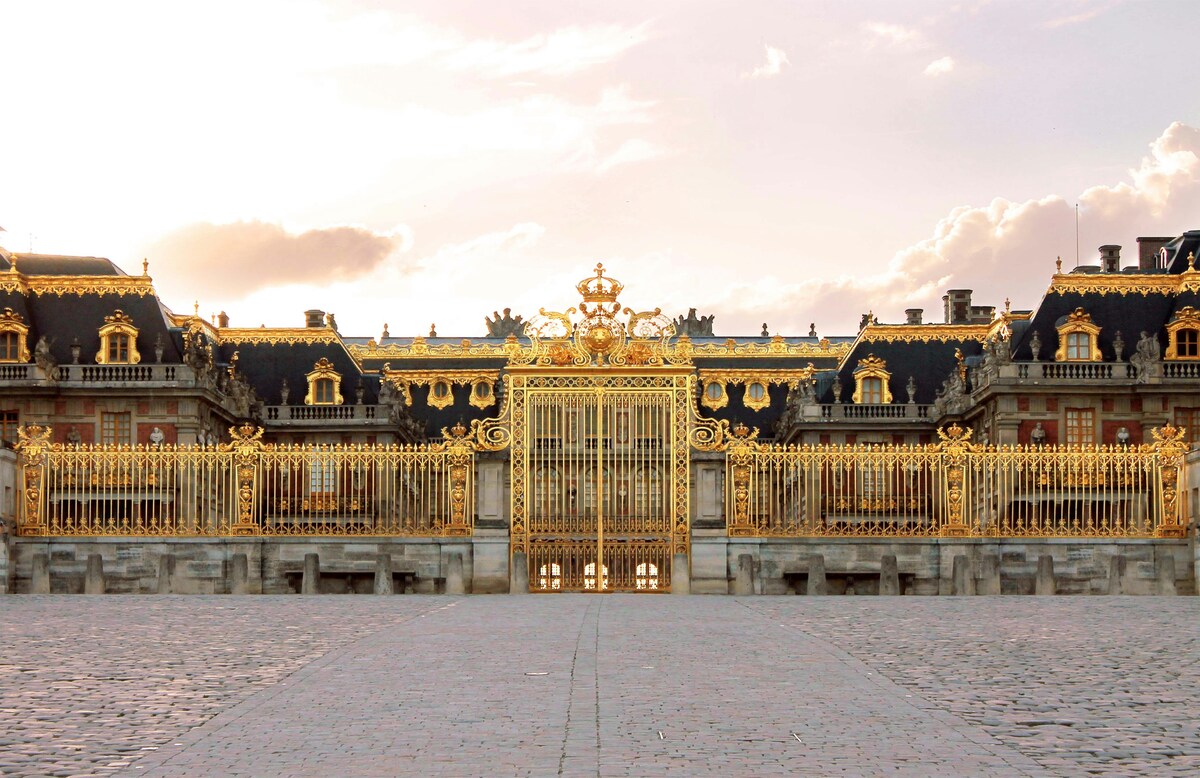
The Château de Versailles remains the ultimate icon of the French monarchy and its ambition for grandeur. Initially a simple hunting lodge for Louis XIII, it became under Louis XIV the political and cultural center of the kingdom, a place where power is staged in every stone, mirror, and garden bed. The Hall of Mirrors, with its 357 mirrors reflecting light and court splendor, symbolizes the king’s control and dazzling influence over his subjects and guests.
The gardens designed by André Le Nôtre span over 800 hectares, punctuated by ponds, statues, and fountains where water becomes an instrument of spectacle and power. The Grand Trianon and Petit Trianon add a more intimate and refined dimension, while the royal apartments illustrate the luxury and protocol of absolute power. Touring the Versailles park by bike is a unique experience: the rhythm of pedaling allows one to grasp the immensity of the estate, appreciate the perspectives, and experience, on a personal scale, Louis XIV’s desire to inscribe his reign in eternity. Every turn, every avenue, every canal tells the story of a monarch who made Versailles a political and artistic masterpiece.
Fontainebleau: The House of Centuries

The Château de Fontainebleau is a true architectural summary of French history. Inhabited for nearly eight centuries, it has seen Capetians, Valois, Bourbons, and emperors pass through, each leaving a mark on the buildings, decorations, and gardens. Italian influence, introduced by François I, blends with classical and Renaissance styles, while Napoleon I imposed his imperial arrangements. The royal apartments, galleries decorated with frescoes, and vast reception rooms recount centuries of ceremonies, political decisions, and sumptuous festivities.
Walking through the alleys and groves of the Fontainebleau park offers a unique perspective on the estate’s vastness, alternating between deep forests and orderly gardens. One then understands why this place was nicknamed “the house of centuries”: each stone, each carved door is a witness to evolution, ambition, and a desire to leave a lasting mark in history.
Vaux-le-Vicomte: The King’s Jealousy
The Château de Vaux-le-Vicomte, located south of Paris, is a 17th-century masterpiece that symbolizes both artistic refinement and court tensions. Designed for Nicolas Fouquet, Louis XIV’s superintendent of finances, it brings together three exceptional talents: architect Louis Le Vau, painter and decorator Charles Le Brun, and gardener André Le Nôtre. Together, they created perfect harmony between architecture, décor, and landscape. The symmetrical façades, richly decorated salons, and French gardens extend as far as the eye can see, designed as a theater where each perspective and avenue guides the gaze toward a point of perfection.
But this magnificence triggered the young king’s jealousy. Impressed and humiliated by the beauty and grandeur of Fouquet’s château, Louis XIV had its owner imprisoned for life. Ironically, Vaux-le-Vicomte became the direct inspiration for Versailles, turning this symbol of personal rivalry into a model for absolute monarchy. For visitors, going to Vaux-le-Vicomte by bike allows them to feel this logic of perspective and staging: the perfectly aligned avenues and reflective ponds reveal the ambition that animated these creations.
Rambouillet: Between Royalty and Republic

Nestled in the Rambouillet forest, this former royal residence illustrates the transition from absolute power to the Republic. From François I to Louis XVI, then Napoleon I and the presidents of the Republic, Rambouillet welcomed emblematic figures of French history. Its gardens combine French geometric and majestic style with English, more natural and pastoral style.
Marie-Antoinette’s dairy, a small jewel of the estate, reveals a taste for intimacy and simple living, away from courtly splendor. Designed as a place where the queen could play the farmer, it illustrates the ability of sovereigns to create spaces for relaxation and creativity in their daily lives. Touring Rambouillet allows discovering these hidden details, following the canals, crossing islands, and feeling the living history intertwined with the surrounding nature.
Normandy: Memory and Freedom
Changing region is like changing era. In Normandy, history leaves the gilded palaces to reach the sand of the beaches and the gravity of memory. Here, every cliff, village, and marine horizon carries the imprint of June 6, 1944. The Allied Landing marked the beginning of the Liberation of France and Europe. The emotion is palpable, even decades later.
Touring these sites by bike transforms the visit into a silent pilgrimage. One moves slowly, letting the sea breeze tell what words sometimes fail to express.
The Landing Beaches: An Open-Air Museum

publicdomainpictures
The five beaches (Utah, Omaha, Gold, Juno, and Sword) are not just geographical locations. They are universal symbols.
- Utah Beach, American sector, evokes troop strategy and coordination.
- Omaha Beach, marked by heavy human losses, remains one of the most moving sites.
- Gold Beach, British sector, saw the installation of the artificial port at Arromanches, an unprecedented logistical feat.
- Juno Beach, Canadian sector, embodies the courage of a nation that came from afar.
- Sword Beach, Franco-British sector, opens the road to Caen.
By bike, linking these beaches gives a concrete perception of distances and the complexity of Operation Overlord. The cliffs, bunkers still visible, museums, and memorials form a landscape where nature and history overlap without ever canceling each other out.
The Liberated Cities and Reconstruction
Bayeux, the first major liberated city, still retains a peaceful atmosphere contrasting with its historic role. Caen, long battered, symbolizes reconstruction. Cherbourg and Saint-Lô recall the intensity of land battles. Normandy is not limited to the memory of the landing; it also tells the story of a region’s postwar rebirth.
Numerous military cemeteries, memorials, and museums (nearly a hundred sites) testify to a collective commitment to memory. It is not only a tribute to soldiers but a celebration of the values of peace, reconciliation, and freedom.

Brigitte-Ferauge
Dordogne: At the Origins of Humanity
Further south, the Dordogne takes us much further back in time. The Vézère Valley, often called the Valley of Man, is one of the world’s greatest prehistoric sanctuaries. Here, history is no longer written in gold letters or carved on monuments, but drawn on rock by hands 17,000 years old. By bike, roads wind between limestone cliffs, rivers, and deep forests. Each stop becomes a dive into Prehistory.
Lascaux: International Center for Parietal Art and Grotto Replica
Discovered in 1940 by four teenagers in the Vézère Valley, the Lascaux cave immediately transformed our understanding of prehistoric art. Its walls, covered with over 600 paintings and engravings, reveal a universe where Paleolithic fauna comes to life with realism and intensity that still amazes visitors today. Bisons, deer, horses, and aurochs are represented with precision and expressive strength, reflecting not only impressive technical skill but also remarkable observational capacity.
Closed to the public since 1963 to protect these fragile works, Lascaux now comes alive through Lascaux IV, an international center for parietal art. This full-scale replica faithfully recreates the atmosphere of the original cave: dim lighting, controlled humidity, constant temperatures, and dripping water noises in the galleries create total immersion. Walking inside this modern sanctuary is almost like going back in time and feeling the breath of prehistoric artists, their precise gestures, and symbolic intentions. For those cycling through the valley, Lascaux IV becomes a must-see stop, a place where the journey extends beyond landscape to a direct encounter with our ancestors’ creativity.

LesCoflocs
Rouffignac: The Kingdom of Mammoths

Grotte-de-Rouffignac
The Rouffignac cave, nicknamed “the cave of a hundred mammoths,” is a true underground cathedral of prehistoric art. With nearly eight kilometers of galleries, it unfolds its corridors in monumental limestone, where traces of humans mingle with those of the animals that preceded them. Here, the mammoth reigns supreme, represented with remarkable volume and perspective for such a distant era. But it is not alone: bisons, horses, and ibex populate the walls, like a living landscape frozen for eternity.
Rouffignac also tells an even older story: bear traces in certain galleries recall that this underground sanctuary was occupied long before modern humans arrived. Touring Rouffignac, on foot or by small electric train, lets one feel this succession of lives, this chronology of animal and human presence, transforming each gallery into a living museum of Prehistory.
Font-de-Gaume and Combarelles
The Font-de-Gaume and Combarelles caves are exceptional testimonies of the artistic sensitivity and symbolic thought of prehistoric humans. Font-de-Gaume is one of the few polychrome sanctuaries still accessible to the public, offering a spectacle of natural colors, incredibly well preserved despite millennia. Bisons, horses, reindeer, and deer are painted with nuances and movements revealing not only refined art but also a conscious vision of life, almost scientific.
A few kilometers away, Combarelles stands out for the abundance and precision of its engravings: nearly 800 animal representations, often arranged in narrative sequences, as if our ancestors were telling stories or recording observations for future generations. These caves are not mere artworks; they are visual archives, graphic journals combining observation, imagination, and symbolism. For culture and history enthusiasts, visiting these sites by bike allows chaining the caves while following the Vézère Valley, turning the route into both a physical and intellectual journey, where each stop offers a lesson in art, science, and humanity.
Troglodyte Shelters and Settlements

Dordogne-Libre
Beyond the decorated caves that made Dordogne famous worldwide, the region also reveals a remarkable set of troglodyte dwellings that show how humans adapted to their environment over millennia. Here, limestone cliffs are not just spectacular natural scenery: they served as refuges, villages, sometimes even real suspended cities. La Roque Saint-Christophe, a huge stone wall nearly a kilometer long, testifies to continuous occupation from Prehistory to the Middle Ages; its natural terraces, transformed into homes, storage spaces, and defensive areas, tell of a surprisingly sophisticated social organization.
Nearby, the Abri Cro-Magnon, emblematic site of the discovery of European Homo sapiens, symbolizes a major turning point in human history, when modern humans appeared with their tools, art, and funeral rites. At Cap Blanc, the rock itself becomes a work of art: a monumental bas-relief bestiary, where horses, bisons, and animal silhouettes seem to emerge from the wall, illustrates the technical mastery and artistic sensitivity of Magdalenian humans. Further afield, sites like Roc de Cazelle or Conquil strongly demonstrate the continuity between early prehistoric shelters and medieval dwellings, proving that these cliffs were inhabited, adapted, fortified, and reinvested over centuries. Walking before these inhabited walls gives the striking impression of traversing multiple eras in a single glance. These places remind us that history is not just about kings, palaces, or great battles: it is also made of daily gestures, hearths lit in sheltered places, tools shaped from stone, and artistic creations born in darkness. It is an intimate and silent, yet profoundly human, history that continues to resonate in every nook of the rock.
When the Path Becomes a Story
Traveling through France like this, from the Loire to Normandy, from Paris to Dordogne, is to understand that history is not confined to books or museums. It lives in stones, gardens, the sand of beaches, and cave walls. Each region tells a different era: the flamboyant Renaissance, absolute monarchy, war and regained freedom, and even the very origins of humanity.
The bicycle then becomes more than a means of transport. It is a rhythm, a way to enter into dialogue with the places. It allows feeling distances, observing details, listening to the silence of a memorial or the murmur of a river. At each turn of the path, a new chapter opens.
Thus, traveling across these territories is like traversing centuries in a few pedal strokes. History is no longer frozen; it moves with you, gradually revealing itself, as if each landscape whispered: keep moving, there is still so much to discover.